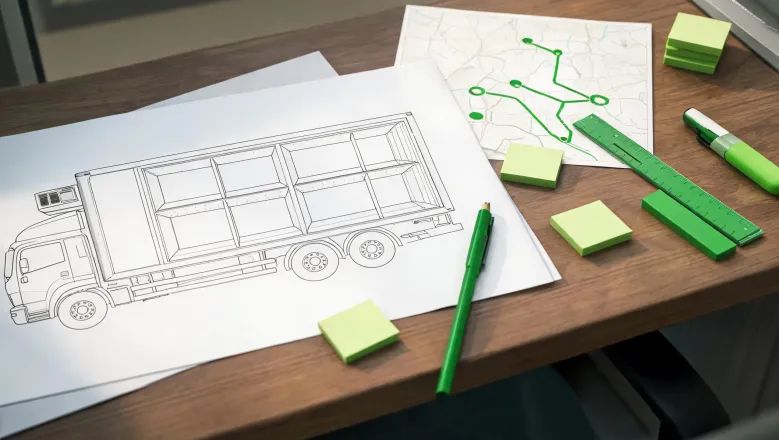
In the cited 4x2 refrigerated van example, the refrigeration unit is designed to hold a pre-cooled load at its required temperature during transit. It is not designed to bring warm cargo down to setpoint. The Thermo King C-Series operator manual for vehicle-powered truck refrigeration units puts both halves of that in one place, and it reframes the purchase. You are not shopping for a cooling-down machine. You are shopping for a box and a unit that can defend a temperature the cargo already has when it rolls up to your dock.
The judgment stops working the moment your load arrives above target and you are counting on the reefer to fix it during the first hour of the run. If that is how your operation actually loads, this verdict does not apply to you, and no spec sheet will save it. That is a loading problem, not a refrigeration feature.
The Unit Holds Temperature, It Doesn't Chill Cargo
So what is the unit designed to do? Maintain the required product load temperature during transit, then the manual states the same limit from the other side: transport refrigeration units are not designed to reduce the load temperature. Read those two lines together and the capability boundary is clear. The unit fights heat coming in through the walls, the doors and the floor. Removing heat that is already sitting inside the product was never the assignment.
Which changes the question you hand a dealer. Ask whether the unit can hold my load on my route, not how fast it pulls an empty box down. Holding is about the box itself, the door openings, the number of stops, and how long the unit runs between them. Those decide whether a load arrives at temperature, and none of them show up on a drivetrain line.
Suppose you run a six-stop city route in July and the rear doors open at every stop. The unit's work is recovery, pulling back the heat that walked in while the doors stood open, then holding again. Every minute a door stays open is heat the unit has to take back out later. Plan the route around that and a holding unit does its job. Ignore it and the unit gets blamed for a delivery schedule it was never built to beat.
How a Reefer Differs From a Blast Chiller
If it only holds temperature, how is it different from a blast chiller? A blast chiller exists to strip heat out of warm product inside a short window. That is its whole purpose, and it is sized and ducted for it. The transport unit in this example is built to sit at a setpoint and stay there with pre-cooled cargo already inside. Same physics, opposite job.
That difference is not trim level. The transport unit's documented role is holding a load temperature during transit, so it changes how you plan a load, how you judge a used van, and what you ask before money changes hands. A used 4x2 van whose unit runs and cools an empty box has shown you it can move heat. It has not shown you it will hold a loaded box through a summer route with stops.
What the cited manual does not hand you is a pull-down rate or a capacity figure, so treat anyone quoting one without a model-specific sheet as unverified. Ask which unit model is fitted and which manual covers it. A vague answer there means you are negotiating blind.
Why the Pre-Cool Step Decides Your Load
Why does the manual tell you to run the unit before anything goes in? With the thermostat set at the desired temperature, you run the unit for half an hour to one hour, or until the desired setpoint is reached, before loading refrigerated cargo. The manual gives two reasons for it: pre-cooling eliminates residual heat, and the run doubles as a test of the refrigeration system. Both reasons point the same way. The box has to be at target before the cargo arrives, because once the doors close the unit is holding, not rescuing. That half hour to one hour belongs to the covered Thermo King C-Series units in that manual. It is not a universal number for every 4x2 van on the market, so check your own unit's documentation rather than copying it.
Run it empty. Load it cold. Get that order wrong and the rest of the day is damage control.
What Warm Cargo Does to the Whole Trip
So what happens when the cargo itself goes in above its target temperature? Cargo loaded at improper temperature carries a high risk of temperature excursions that can lead to load loss and potential contamination. The same food-safety brief names two more risk factors: mixing dry and refrigerated product in one box, and letting cargo sit in an unrefrigerated environment between cold storage and the vehicle. Those are loading principles rather than a procedure for one model, and they apply to a new box as much as an old one.
Put the two halves together and the logic gets uncomfortable. The unit holds what it is given, so the temperature at the door is the input and everything downstream is a holding exercise on that input. A warm pallet in a cold box is not a refrigeration problem you can solve by buying a bigger unit. It is a decision that was already made at the dock.
Which brings up the part buyers blur most: what actually sets your cargo temperature in the first place?
The 4x2 Drivetrain Does Not Set Your Cargo Temperature
Does the 4x2 layout tell you what setpoint your cargo needs? No. 4x2 describes how the vehicle's axles are configured. It says nothing about product temperature, and the food-safety setpoint has to come from the shipper or from the product requirement itself. Those are two separate conversations, and a spec sheet is happy to let you confuse them.
Practical version: never let a drivetrain spec stand in for a temperature requirement. Ask for the load's target temperature in writing, then ask separately for the documented operating range of the unit actually fitted to the truck. If that range does not cover your target with room to spare, the axle layout is beside the point.
One last question: who documents what went into the box?
One Check Before Your First Loaded Run
What is the one thing to confirm before the first loaded run? That somebody actually checks and records the load temperature while loading, and notes whether any product sits out of range. That is the instruction in the cited manual, and it is unglamorous on purpose. No gauge on the dash replaces it.
Why that one and not a spec? What goes in warm stays a risk the unit was never built to erase, so the loading record is the only evidence that the temperature you are defending was right from the start. If you cannot show that record for the first run, settle it before the wheels turn, not after the customer calls.

Discuss this requirement
Use the procurement form for questions tied to your cargo operation. This is a sourcing inquiry, not a public comment or purchase agreement. Include the vehicle quantity and destination so open requirements can be reviewed in context.