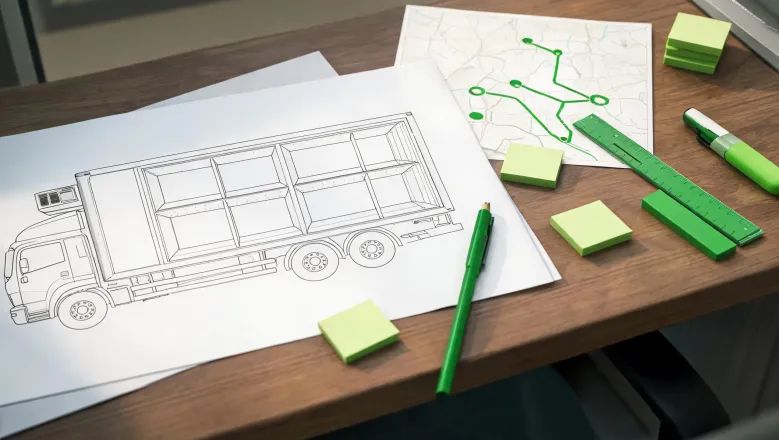
You are at the rear doors of a 4x2 refrigerated van on a distribution dock, probe in one hand, controller in the other, the unit running overhead, and the pallets at the top of the load read warmer than the display says they should. The driver beside you has already decided the system is low on refrigerant. On the evidence in this article, that is not the first place to look.
Everything below is scoped to a cited 4x2 refrigerated van truck example: one body, one unit, a load that went in already cold, and a unit that runs. Nothing here is a universal setpoint or a food-safety number, because those belong to your shipper, your product and your own unit manual. The verdict up front is that the unit is probably doing exactly the job it was built for, and the problem sits in the air path or in the cargo temperature at the moment the doors closed.
Why the Unit Runs and Cargo Stays Warm
Transport refrigeration units maintain a product load temperature during transit. They are not designed to reduce the load temperature. That distinction reshapes the whole diagnosis, because a unit holding its setpoint while the freight reads warm is not failing you. It is being asked to do something outside its design brief.
The other half of the picture is air. Poor air distribution is one of the primary causes of product deterioration even when unit capacity is more than adequate, which is how a strong unit leaves a warm pocket at the top of a load and still looks healthy on the controller.
Sort the symptom into two families before you touch anything. One lives inside the box: where the cold air can and cannot travel, and how warm the pallets were when they went in. The other is a genuine unit fault. Only one of those two can be tested at the dock in a few minutes without a technician, and it is not the one with the refrigerant in it.
Short Cycling Fools the Return-Air Reading
Short cycling is what happens when air cannot travel far enough inside the box and the cool air feeds straight back into the refrigeration unit, which then believes the trailer temperature is accurate. The unit cycles down trusting its own sensor. Nothing has failed; the air simply never reached the freight.
Obstructed air channels sharpen the effect, blocking the cold air and pushing it back toward the unit while cargo temperature climbs and a temperature excursion stops being theoretical.
Here is the decision point. If the return-air reading drops right after the doors close while the cargo probe stays warm, go with the airflow explanation first. The trade-off is an hour of re-stacking at the loading bay against a day in the shop, and on a load that went in cold, that hour usually wins.
Clear the Air Path Before You Read Temperatures
Air path first.
Obstructions between pallets, along the floor, or against the walls leave the cold air with nowhere to travel, so the box develops hot spots in the gaps the air never reaches while the return sensor keeps reporting a satisfied trailer.
Only after the floor, the gaps and the wall clearance look right do the readings mean anything. Check the return-air temperature readings and confirm they sit inside the desired range for that load. If they do not, the manual for your specific unit refers you to a table for that controller, and you should pull that table from your own documentation rather than from a generic article, because the figures are tied to the hardware in front of you.
If the load sits tight against the walls and the bulkhead, go with re-stacking for airflow and accept the lost cube. Skip touching the load only when it is already unloaded or the packaging is friable enough that moving it does damage; in that case record the layout as loaded and raise it with whoever built the pallets.
Warm-Loaded Cargo Does Not Catch Up
Suppose a 4x2 refrigerated van is loaded at a dock with pallets that came off a warm trailer, the doors close, the unit runs, and the operator watches the cargo probe instead of the return air for the whole run. By the time the doors shut, whatever heat was in the pallets is inside the box with them, and the run ends with freight still warm because nothing in the design brief was about removing that heat.
That is a scenario, not a test result, and it is the shape of the call a fleet makes when it has a working unit and a warm load. The van did its job. The load was already behind before the wheels turned.
The trade-off here is blunt. If the cargo was warm at the dock, you can hold what you have and put the load condition back on the shipper, or you can run and gamble on an excursion. One choice protects the product and costs you a phone call; the other protects the schedule and puts the risk inside your box.
When to Stop Checking and Call Service
Some warm loads are not loading problems. When the unit cannot hold its own return-air target with a clear air path and a load that went in cold, go with service and skip further dockside rework, because no amount of re-stacking will fix a unit that is not doing its designed job.
Where that lands on repair versus replace is a commercial call, not a diagnosis: when the pattern repeats load after load with a verified clear air path, ask the dealer for the repair scope and weigh it against what the van earns in a season.
Before you call anyone, write down three things: what the return air read through the run, where the pallets sat relative to the floor and walls, and what the cargo read when it was loaded. Those lines separate an air-path case from a unit case faster than any roadside opinion.
Then put two questions to the body or unit manufacturer. What return-air range is that controller supposed to hold for your load, and how does the unit behave when an alarm is active? Both answers are controller-specific and both come from the documentation for the unit you actually bought.
Who Should Skip This Airflow Diagnosis
Skip this path if your unit has never held setpoint since the day it was delivered, or if you are expecting the box to chill warm cargo on the road. The first is a service question and the second is a loading question, and the airflow-first route will waste your afternoon on both.
Stay with it if the load went in cold, the unit runs, and the cargo still reads warm. That route buys a fast answer on the common case and deliberately gives up precision on the uncommon one; when the air path is clear and the cargo probe is still climbing, you have narrowed the fault to the unit and earned the right to call for service with a clean description in hand.

Discuss this requirement
Use the procurement form for questions tied to your cargo operation. This is a sourcing inquiry, not a public comment or purchase agreement. Include the vehicle quantity and destination so open requirements can be reviewed in context.